
What Is an AI Vending Machine? How Does It Work?
Traditional vending machines are easy to recognise: choose a product, press a button, make payment and wait for the machine to dispense the item.
An AI vending machine works differently.
Instead of dispensing products one at a time through fixed slots or coils, an AI vending machine can operate more like a small self-service store. Customers open the machine, take the products they want, and the system identifies the selected items before completing the transaction.
This creates a more flexible grab-and-go shopping experience while allowing operators to manage products, payments, inventory and transactions digitally.
But what exactly makes a vending machine “AI”, and what happens behind the scenes?

What Is an AI Vending Machine?
An AI vending machine is an unattended retail system that uses technologies such as computer vision, cameras, software and product recognition models to identify the items selected during a shopping session.
Unlike a traditional vending machine, products do not necessarily need to sit inside individual dispensing coils. Instead, drinks, snacks, fresh food and other suitable packaged products can be placed on shelves inside a smart cabinet or chiller.
The system observes the shopping session, recognises the products selected and calculates the final order.
Different AI vending systems can use different technical approaches. Some rely mainly on computer vision, while others may combine cameras with sensors, RFID or other technologies. The important point is that “AI vending machine” describes a category rather than one universal hardware design.
How Does an AI Vending Machine Work?
From the customer's perspective, the shopping process should remain simple.
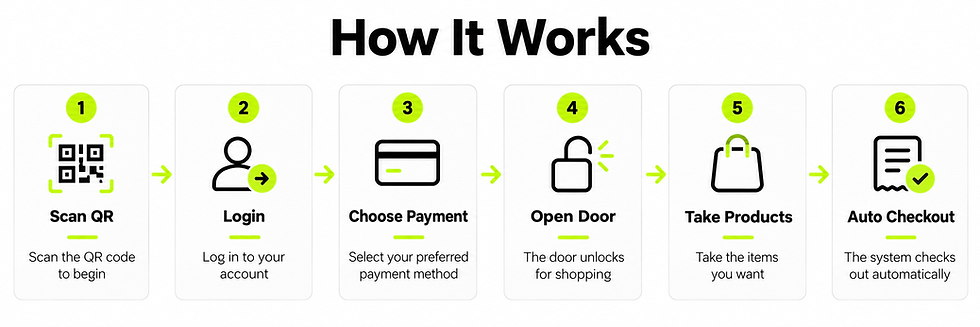
A typical SnapGo shopping journey works like this:
1. Scan the QR Code
The customer scans the QR code on the machine using a smartphone.
First-time users complete a short registration process, while returning users can log in using their existing account.
2. Choose a Payment Method
Once logged in, the customer selects the available payment option.
Depending on the machine configuration, supported payment methods can include online payment, cashless payment or a POS terminal.
3. The Door Unlocks
After the payment session has been authorised, the smart vending machine unlocks.
Unlike a traditional vending machine, the customer does not need to select one product from a fixed slot before opening the machine.
4. Take the Products
The customer opens the door and takes the products they want.
They may take more than one item during the same shopping session.
If they pick up an item and decide not to buy it, it can be returned to the cabinet before the door is closed.
5. AI Recognises the Products
Internal cameras and the AI recognition system analyse the products involved in the shopping session.The system uses visual information such as packaging, shape, colour and other product features to determine which items were taken.
6. Automatic Checkout
Once the door is closed, the system finalises the order.
The recognised products are added to the transaction, the appropriate amount is charged and the order is recorded in the backend system.
The entire experience is designed around a simple idea:
Open. Take what you need. Close the door. Let the system handle the checkout.
SnapGo's current customer flow similarly combines QR access, payment, open-door shopping and automatic checkout.
What Does the “AI” Actually Do?
The AI component is not there simply to make the vending machine sound more advanced.
Its main purpose is to help the system understand what happened during the shopping session.
Product Recognition
Before a new product is introduced, it needs to be prepared for the AI recognition system.
Different views of the packaging may be used so the system can learn how to distinguish the product from other items.This becomes especially important when several flavours from the same brand have similar packaging.
Shopping Session Analysis
During a purchase, the system analyses the activity inside the machine.
Its job is to identify which products were taken and which products were returned.
Automatic Basket Calculation
Once the session ends, the recognised products are converted into a final shopping basket.
The transaction can then proceed without the customer scanning every individual barcode.
Operational Data
AI vending is also connected to the operating side of the business. Operators can use backend systems to review orders, monitor inventory and investigate unusual transactions when necessary.

This is why operating an AI vending machine involves more than simply installing a refrigerator and filling it with products.

Traditional vending machines can be very suitable for standardised drinks and snacks.
AI vending becomes particularly interesting when the operator wants more flexibility in product size, packaging, product mix and open-door shopping.
What Can Be Sold in an AI Vending Machine?
One of the main advantages of an open-shelf AI vending format is product flexibility.
Depending on the machine temperature and product requirements, an operator may consider products such as:
Drinks: coffee, tea, juice, soft drinks and bottled water.
Snacks: chips, biscuits, chocolate, nuts and packaged snacks.
Bakery products: bread, croissants and selected cakes.
Fresh or chilled food: sandwiches and other properly packaged chilled products where storage requirements can be maintained.
Quick meals: selected ready-to-eat or heat-to-eat products.
The important consideration is not simply whether the product physically fits inside the machine.
Operators also need to consider:
shelf life, temperature requirement, packaging visibility, AI recognition, demand and restocking frequency.
Where Are AI Vending Machines Suitable?
AI vending works best when the location has a clear need for convenient unattended retail.
Typical locations can include:
Offices
Employees can access drinks, snacks and selected food without leaving the workplace.
This can be especially useful for larger offices, shift-based operations and workplaces without a full cafeteria.
Condominiums
Residents can access everyday convenience products close to home, including outside traditional shop operating hours.
Factories and Workplaces
Locations operating long hours or multiple shifts may benefit from retail access beyond standard office hours.
Commercial Spaces
Certain commercial buildings, education environments and shared spaces may also be suitable depending on traffic, security, accessibility and demand.
However, machine technology alone does not determine whether a location will perform well.
Location quality still matters.
Population, footfall, operating hours, purchasing behaviour, rental or commission cost, power availability and restocking access all affect the final result.
What Happens Behind the Scenes?
For customers, AI vending should feel simple.
For operators, there is considerably more happening behind the machine.
Before a product reaches the shelf, an operator may need to:
source and evaluate the product
prepare the product for AI recognition
configure pricing
test different flavours and packaging
verify payment behaviour
load stock into the machine
monitor transactions
review unusual orders
restock according to demand
handle customer enquiries or refunds
monitor hardware, connectivity and temperature
This operational layer is one of the most important differences between simply owning a machine and running a reliable unattended retail service.

At SnapGo, this operating experience also informs how machines are integrated and tested before deployment.
Is an AI Vending Machine Completely Automatic?
The customer checkout process can be highly automated, but the business itself is not completely hands-off.
Someone still needs to manage:
products
stock
pricing
restocking
payment issues
system monitoring
customer support
maintenance
AI can reduce some manual steps and provide better operational visibility, but successful vending still depends on good daily operations.
AI Vending Is More Than Just the Machine
The most visible part of an AI vending business is the cabinet customers see.
But a complete system also depends on:
Machine hardware + AI recognition + payment integration + products + connectivity + backend software + operations.
When all of these components work together, AI vending can provide a convenient unattended retail experience without forcing customers to purchase products one at a time.
For businesses, property managers and operators in Malaysia, the technology creates another way to provide convenient retail access in offices, condominiums and modern workplaces.
Learn More About AI Smart Vending
If you're exploring how AI vending can be used in a real location, you can continue with:
AI Vending Machine Malaysia→Homepage
Smart Office Vending Solutions→ /smart-office
AI Vending Machine Business & Ownership Options→ /partnership
Comments